Creating a Restful Home
We want to walk through our front door and feel that we can rest, but what creates that feeling is different for everyone. For one person, a restful room might be pale and quiet, with linen curtains and very little on the walls. For another, it might be full of colour, books, flowers and things collected over the years. Learn what makes you feel good in your own space, and what can take that feeling away.
We tend to think about our homes visually, with a checklist off Pinterest. Is the furniture right? Does the room look finished? Is the colour chic? But a better place to begin is how your home makes you feel. Notice where you naturally relax. Which room makes you breathe out. Is there somewhere you instinctively go when you want to be alone, or somewhere you always want to gather with people. Notice what you love coming home to, and what gives annoyance. Maybe there’s a colour you thought you loved but find oppressive on a large wall. Maybe the overhead lighting makes you feel restless. Maybe there’s a chair always just covered in clothes because it’s not comfortable enough to sit in. Maybe there are things around you that are lovely, but don't feel like you. Spend some time walking around your home with fresh eyes. You could even keep a little note on your phone for a week of what you love, and what you don’t. Think about the places you naturally feel drawn to, too. Maybe there was a hotel room you never wanted to leave, a restaurant that always makes you feel great, or a friend's house where you feel instantly comfortable. Don't think about what you are supposed to like, or what you are aspiring to, or what you think you should want. Think about what actually makes you happy.
A restful home isn't simply somewhere that looks beautiful. It should make it easier to do the things that make you happy. If you love baking but hate getting everything out every time, give your baking things a little home of their own. Keep the flour, tins, scales and favourite tools together in one cupboard, or dedicate a drawer to them. Then when the urge for cake arrives, you can simply begin. If reading is one of the ways you properly switch off, make it easy to read. A comfortable chair, a beautiful lamp, a little side table for your book and somewhere to put your tea means you don't have to create the conditions for reading every time you want to do it. The same applies to creativity. Keep your paints, sketchbooks, brushes or sewing things together. A drawer or cupboard containing everything you need can be the difference between I'd love to paint today and actually sitting down to paint. These little arrangements aren't about being organised for organisation's sake. They're about removing the small barriers between you and the things you enjoy. Your home can quietly encourage the life you want to live.
Restfulness doesn't mean removing everything. A home stripped of everything personal can feel sterile. The things that make us feel most at ease are often the things that tell us we belong there. A photograph you love. A painting that makes you happy every time you look at it. A beautiful old chair. Books you return to. Flowers from the garden. A bowl you brought home from somewhere you loved. Don't be afraid of things simply because they aren't minimal. The question isn't Is this object necessary? It's How do I feel when I see it? If the answer is happy, comforted, amused or inspired, that's a very good reason to keep it.
There are also things we keep because we feel that we should. A gift from someone we love but never actually liked. Something expensive that we feel guilty about getting rid of. A piece of furniture that belonged to a relative. Something we bought for a previous version of ourselves and have simply never reconsidered. There can be an enormous emotional weight attached to possessions. But keeping something doesn't have to be the only way of honouring the person who gave it to you, the money you spent on it or the life you once lived. You are allowed to acknowledge that something was meaningful and still decide that it doesn't belong in your home anymore. Sometimes creating a more restful space means letting go of things that carry a little more emotional noise than we realised.
There is a temptation to imagine a restful home as an almost empty one. Pale walls, natural textures, very little furniture and a single vase of flowers. And if that makes you feel wonderful, then go ahead. But restfulness isn't a decorating style. A colourful sitting room can be restful. So can a dark, cosy bedroom. A house full of antiques can be restful. So can a very modern space. If you love colour, don't remove it because you've decided calm rooms are supposed to be neutral. If you love objects, don't hide them all away because minimalism looks beautiful in photographs. The most restful homes aren't necessarily the quietest visually. They're the ones that feel instinctively right to the person living there.
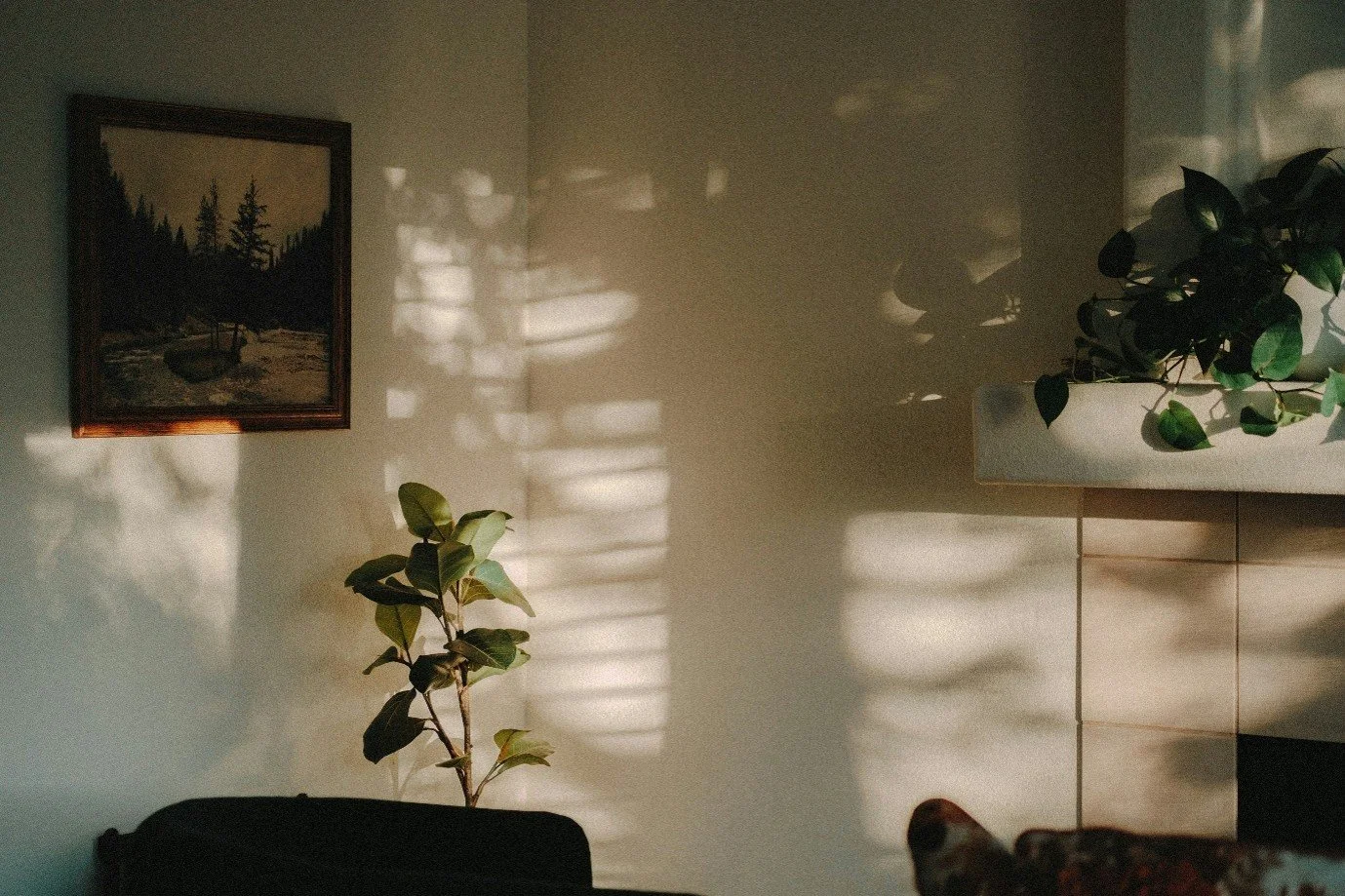
Different rooms in your home will ask for different things. Spend some time noticing how the light moves through your rooms. Which ones receive beautiful morning light? Which become golden in the afternoon? Which feel cooler and quieter? How does the room change as the day goes on? Think about what you want the room to feel like, too. Perhaps you want somewhere to feel warm and cocooning. Perhaps you want it to feel fresh and energising. Perhaps you want a little of both. The direction of the room can be a useful starting point.
North facing rooms tend to have cooler, more atmospheric light. You can warm them up with colours that have warmer undertones, or you can lean into that cooler quality with soft blues, greens and greys and let the character of the light become part of the room. South facing rooms tend to receive warmer, stronger light, which can be beautiful with soft neutrals and cooler colours that balance it.
East facing rooms are often bright and fresh in the morning before becoming quieter later in the day, while west facing
rooms can take on a lovely warmth as the afternoon turns to evening. These aren't rules. They're simply things to notice. And if you're thinking about painting, don't rush it. Try samples on the actual walls and live with them for a while. Look at them in the morning, in the afternoon and after dark. Notice how the colour changes and, more importantly, how you feel in the room. You can always paint over it.
We often think about how our homes look during the day, but most of us spend a great deal of time at home in the evening. Let the house change with you. Turn off the harsh overhead lights and allow lamps and smaller pools of light to take over. Think about where you actually want to see clearly and where you simply want the room to feel soft. Fragrance can change the atmosphere too. Perhaps it's a candle, incense, a diffuser or simply an open window. Lavender is often held up as the ultimate calming scent, but perhaps you hate lavender. Maybe oranges make you happy. Maybe lilies remind you of somewhere you love. Maybe you prefer the smell of freshly washed linen or your garden after rain. Scent is so closely tied to memory and personal preference that there is no reason to follow somebody else's idea of what should make you feel calm. If it makes you happy, lean into it.
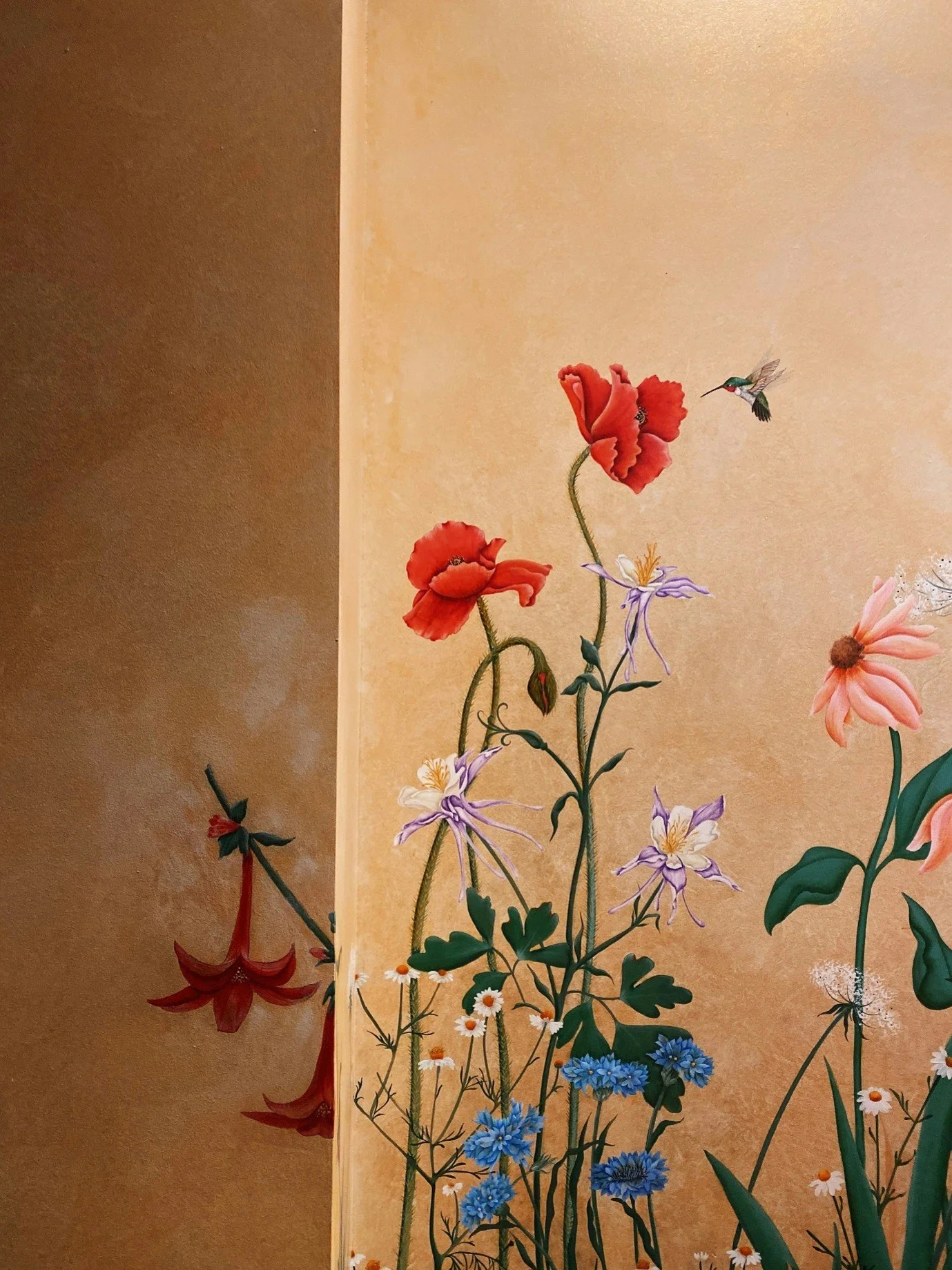
Your home doesn't have to be a finished project. If you've always wanted to paint flowers around a doorframe, paint them. If you suddenly want a room to be pink, make it pink. If you want to hang an enormous painting somewhere that convention says it shouldn't go, try it. You can always change your mind. Very little has to be permanent. Paint can be painted over. Furniture can be moved. Pictures can be rehung. A room can become something completely different in an afternoon. Sometimes knowing that you can change your surroundings is restful in itself.
But the opposite can be just as true. If the thought of turning your home into a project fills you with dread, don't create one. You don't need to spend your weekends painting walls, sourcing vintage furniture or endlessly rearranging shelves in pursuit of some imagined finished result. Perhaps what brings you peace is white walls. A simple room can be a beautiful canvas for the things that make you happy: a vase of flowers, a collection of art, books, plants, a beautiful chair, the morning light coming through the window. There’s no prize for having done more. The point isn't to decorate your home as extensively as possible. It's to create an environment that gives something back to you. For some people, that might mean a riot of colour and a house full of creative experiments. For others, it might mean clean white walls, very little clutter and a few things chosen with enormous care.
Perhaps the biggest mistake we make is treating our current home as temporary. Don't wait for your forever home. We tell ourselves we'll decorate properly when we move. We'll buy the beautiful lamp then. We'll hang the pictures when we're somewhere more permanent. We'll make the bedroom lovely when we finally have the house we really want. Your life is happening in the home you have now. Even if you're renting. Even if you're planning to move next year. Even if you're living somewhere you never imagined staying. Make it yours. Put up the pictures. Buy the flowers. Rearrange the furniture. Find the lamp that makes the evenings feel beautiful. Make your bedroom somewhere you genuinely look forward to returning to. It doesn't have to be permanent to be worth caring about.
Don’t worry about thinking of your home as a finished project. Our tastes change. Our lives change. The things that comfort us change. A colour that once felt wonderful might eventually feel tiring. A room that worked perfectly when you were younger might no longer suit the way you live. Something you once treasured might have quietly become a burden. That's okay. Your home is allowed to evolve. You don't need to get everything right the first time. Over time, you begin to understand the particular combination of light, colour, scent, texture, order and personality that makes you feel most at ease. And perhaps that's what creating a restful home really is. Not creating a perfect space or following a particular aesthetic but making somewhere that feels yours.